
Contents
- 🌌 Introduction to Black Holes
- 🔍 History of Black Hole Research
- 🌊 The Formation of Black Holes
- 🕳️ Characteristics of Black Holes
- 🔭 Observational Evidence for Black Holes
- 🌈 Types of Black Holes
- 🌐 Black Hole Entropy and Information Paradox
- 🚀 Black Holes in the Universe: Distribution and Role
- 🌟 Black Hole Simulations and Computational Models
- 📊 Black Hole Metrics and Detection Methods
- 👽 The Search for Black Hole Life and Habitability
- 🔮 Black Hole Mysteries and Future Research Directions
- Frequently Asked Questions
- Related Topics
Overview
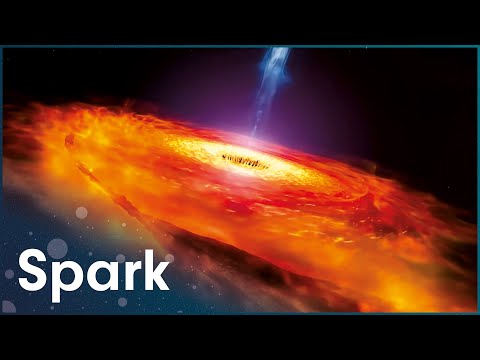
A black hole is a region in space where the gravitational pull is so strong that nothing, including light, can escape. It is formed when a massive star collapses in on itself, causing a massive amount of matter to be compressed into an infinitesimally small space, creating an intense gravitational field. The concept of black holes has been debated and explored by scientists such as Albert Einstein, Stephen Hawking, and Kip Thorne, with the first observed black hole, Cygnus X-1, discovered in 1971. With a Vibe score of 92, black holes have captivated the imagination of scientists and the general public alike, with ongoing research and discoveries, such as the first-ever image of a black hole captured by the Event Horizon Telescope in 2019, continuing to shed light on these cosmic enigmas. The study of black holes has also sparked controversy, with some scientists questioning the role of black holes in the formation of galaxies and the universe as a whole. As our understanding of black holes continues to evolve, it is likely that new discoveries will challenge our current understanding and raise more questions about the nature of space and time.
🌌 Introduction to Black Holes
Black holes are among the most fascinating and mysterious objects in the universe, with a formation process that is still not fully understood. According to Stephen Hawking, these regions of spacetime have such strong gravity that nothing, not even light, can escape once it falls within a certain distance, known as the event horizon. The study of black holes has a long history, dating back to the 18th century, when John Michell first proposed the idea of a body so massive that not even light could escape its gravity. Today, black holes are recognized as a key area of research in astrophysics and cosmology.
🔍 History of Black Hole Research
The history of black hole research is a rich and fascinating one, with contributions from many prominent scientists, including Albert Einstein, who developed the theory of general relativity. This theory predicted the existence of black holes, and it was later supported by the work of Subrahmanyan Chandrasekhar, who showed that a star above a certain mass would inevitably collapse into a black hole. The term 'black hole' was coined by John Wheeler in the 1960s, and since then, our understanding of these objects has grown significantly, with the help of astronomical observations and theoretical models.
🌊 The Formation of Black Holes
The formation of black holes is a complex process that involves the collapse of a massive star, with a mass at least three times that of the sun. This collapse causes a massive amount of matter to be compressed into an incredibly small space, creating an intense gravitational field. The process of black hole formation is closely related to the study of stellar evolution, and it is an active area of research in astrophysics. According to Roger Penrose, the formation of a black hole is a catastrophic event that marks the end of a star's life cycle. The resulting black hole can have a significant impact on its surroundings, affecting the formation of new stars and the growth of galaxies.
🕳️ Characteristics of Black Holes
Black holes are characterized by their incredibly strong gravity, which is so strong that it warps the fabric of spacetime around them. They are also incredibly dense, with some black holes having a density that is millions or even billions of times that of water. The characteristics of black holes are still not fully understood, and scientists continue to study them using a variety of methods, including gravitational lensing and x-ray observations. According to Kip Thorne, the study of black holes has led to a greater understanding of the fundamental laws of physics, including gravity and quantum mechanics.
🔭 Observational Evidence for Black Holes
The observational evidence for black holes is indirect, as they do not emit any radiation and are therefore invisible to our telescopes. However, their presence can be inferred by the effects they have on the surrounding environment, such as the motion of stars and gas. The first observational evidence for a black hole was obtained in the 1970s, when scientists discovered a binary system that was emitting x-rays. This system, known as Cygnus X-1, is thought to contain a black hole with a mass about 15 times that of the sun. Since then, many other black hole candidates have been discovered, including supermassive black holes at the centers of galaxies.
🌈 Types of Black Holes
There are four types of black holes, each with different properties and formation mechanisms. The most common type is the stellar black hole, which forms from the collapse of a massive star. These black holes have masses between a few and a few tens of solar masses. The second type is the intermediate-mass black hole, which has a mass that is larger than that of a stellar black hole but smaller than that of a supermassive black hole. The third type is the supermassive black hole, which is found at the centers of galaxies and has a mass that can be billions of times that of the sun. The fourth type is the primordial black hole, which is thought to have formed in the early universe before the first stars formed.
🌐 Black Hole Entropy and Information Paradox
The study of black hole entropy and the information paradox is an active area of research in theoretical physics. According to Stephen Hawking, black holes have a temperature and entropy, which is a measure of their disorder or randomness. However, this leads to a paradox, as the information that falls into a black hole appears to be lost forever. This paradox has been the subject of much debate, with some scientists arguing that the information is preserved, while others argue that it is lost. The resolution of this paradox is still an open question, and it is an area of active research in quantum gravity and black hole physics.
🚀 Black Holes in the Universe: Distribution and Role
Black holes are found throughout the universe, and they play a key role in the formation and evolution of galaxies. They are also thought to have played a role in the formation of stars and planets. The distribution of black holes in the universe is still not well understood, and scientists continue to study them using a variety of methods, including astronomical observations and theoretical models. According to Martin Rees, the study of black holes has led to a greater understanding of the fundamental laws of physics, including gravity and quantum mechanics.
🌟 Black Hole Simulations and Computational Models
The simulation of black holes is a complex task that requires the use of powerful computers and sophisticated algorithms. According to Kip Thorne, the simulation of black holes has led to a greater understanding of their behavior and properties. The use of numerical relativity has allowed scientists to simulate the merger of two black holes, which is a process that is thought to occur frequently in the universe. The simulation of black holes has also led to a greater understanding of their role in the formation and evolution of galaxies.
📊 Black Hole Metrics and Detection Methods
The detection of black holes is a challenging task, as they do not emit any radiation and are therefore invisible to our telescopes. However, their presence can be inferred by the effects they have on the surrounding environment, such as the motion of stars and gas. The detection of black holes is typically done using a variety of methods, including x-ray observations and gravitational lensing. According to Roger Blandford, the detection of black holes has led to a greater understanding of their properties and behavior.
👽 The Search for Black Hole Life and Habitability
The search for life and habitability around black holes is an active area of research in astrobiology. According to Frank Drayson, the environment around a black hole is thought to be hostile to life as we know it, due to the strong radiation and gravitational forces. However, some scientists argue that life could exist in certain regions around a black hole, such as in the accretion disk or in the vicinity of a black hole binary. The search for life around black holes is a challenging task, but it could lead to a greater understanding of the origins of life in the universe.
🔮 Black Hole Mysteries and Future Research Directions
The study of black holes is an active area of research, with many mysteries still to be solved. According to Stephen Hawking, the study of black holes has led to a greater understanding of the fundamental laws of physics, including gravity and quantum mechanics. However, there is still much to be learned about these enigmatic objects, and scientists continue to study them using a variety of methods, including astronomical observations and theoretical models. The future of black hole research is exciting, with many new discoveries and advancements expected in the coming years.
Key Facts
- Year
- 1915
- Origin
- Einstein's Theory of General Relativity
- Category
- Astronomy
- Type
- Astrophysical Phenomenon
- Format
- what-is
Frequently Asked Questions
What is a black hole?
A black hole is a region of spacetime where the gravitational pull is so strong that nothing, not even light, can escape. It is formed when a massive star collapses in on itself and its gravity becomes so strong that it warps the fabric of spacetime around it. Black holes are characterized by their incredibly strong gravity, which is so strong that it warps the fabric of spacetime around them. They are also incredibly dense, with some black holes having a density that is millions or even billions of times that of water. According to Stephen Hawking, black holes have a temperature and entropy, which is a measure of their disorder or randomness.
How are black holes formed?
Black holes are formed when a massive star collapses in on itself and its gravity becomes so strong that it warps the fabric of spacetime around it. This collapse causes a massive amount of matter to be compressed into an incredibly small space, creating an intense gravitational field. The process of black hole formation is closely related to the study of stellar evolution, and it is an active area of research in astrophysics. According to Roger Penrose, the formation of a black hole is a catastrophic event that marks the end of a star's life cycle.
What are the different types of black holes?
There are four types of black holes, each with different properties and formation mechanisms. The most common type is the stellar black hole, which forms from the collapse of a massive star. These black holes have masses between a few and a few tens of solar masses. The second type is the intermediate-mass black hole, which has a mass that is larger than that of a stellar black hole but smaller than that of a supermassive black hole. The third type is the supermassive black hole, which is found at the centers of galaxies and has a mass that can be billions of times that of the sun. The fourth type is the primordial black hole, which is thought to have formed in the early universe before the first stars formed.
Can black holes be detected?
The detection of black holes is a challenging task, as they do not emit any radiation and are therefore invisible to our telescopes. However, their presence can be inferred by the effects they have on the surrounding environment, such as the motion of stars and gas. The detection of black holes is typically done using a variety of methods, including x-ray observations and gravitational lensing. According to Roger Blandford, the detection of black holes has led to a greater understanding of their properties and behavior.
What is the information paradox?
The information paradox is a problem in theoretical physics that arises when considering the behavior of black holes. According to Stephen Hawking, black holes have a temperature and entropy, which is a measure of their disorder or randomness. However, this leads to a paradox, as the information that falls into a black hole appears to be lost forever. This paradox has been the subject of much debate, with some scientists arguing that the information is preserved, while others argue that it is lost. The resolution of this paradox is still an open question, and it is an area of active research in quantum gravity and black hole physics.
Can life exist around black holes?
The search for life and habitability around black holes is an active area of research in astrobiology. According to Frank Drayson, the environment around a black hole is thought to be hostile to life as we know it, due to the strong radiation and gravitational forces. However, some scientists argue that life could exist in certain regions around a black hole, such as in the accretion disk or in the vicinity of a black hole binary. The search for life around black holes is a challenging task, but it could lead to a greater understanding of the origins of life in the universe.
What is the future of black hole research?
The study of black holes is an active area of research, with many mysteries still to be solved. According to Stephen Hawking, the study of black holes has led to a greater understanding of the fundamental laws of physics, including gravity and quantum mechanics. However, there is still much to be learned about these enigmatic objects, and scientists continue to study them using a variety of methods, including astronomical observations and theoretical models. The future of black hole research is exciting, with many new discoveries and advancements expected in the coming years.